


History
The traditions of craftsmanship and classic recipes established back in the 19th century became a solid foundation for an enterprise that has since grown into one of the largest in the industry. For over a century, MINSK KRISTALL has remained true to quality and production culture, developing what once began as a small yeast and distillery in the center of Minsk. Today, the enterprise combines the experience of generations with modern technology, creating products known far beyond Belarus. This is continuity, confidence, and craftsmanship that have become an integral part of the MINSK KRISTALL name.
Timeline of MINSK KRISTALL
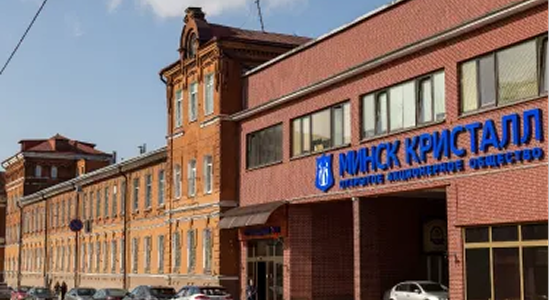
The starting point of MINSK KRISTALL's history is 1893, when industrialist brothers Yankel and Zelman Rakovshchik founded a yeast and distillery on Nizhne-Lyakhovskaya Street (now Oktyabrskaya) in Minsk.
Production began with a steam engine of 5 horsepower, several fermentation vats, and 20 workers. Here they produced dry yeast and alcohol — a modest beginning backed by ambition, hard work, and confidence in the future.
By the 20th anniversary of its founding, the enterprise underwent a large-scale reconstruction: dynamos, locomotives, and gas generators were installed. The number of workers increased to fifty.
The plant became one of the most modern industrial enterprises in Minsk and a leader in its industry in Belarus.
World War I and the revolutionary events brought serious changes to the plant's operations. After nationalization, production facilities were transferred to a state alcohol warehouse and vodka factory.
Despite difficult conditions, the enterprise retained its foundation and became part of the new economy.
On October 12, 1925, it received a new name — the Minsk Alcohol and Vodka Plant. Production geography expanded: sales offices and warehouses appeared in Belarusian cities — Borisov, Slutsk, Bobruisk, and Mozyr. Production gradually returned to stability.
In the interwar period, the enterprise actively introduced new technologies: filters and water purification methods were improved, and activated charcoal began to be used.
Production processes became increasingly technological, and product quality became stable and high.
The Minsk Alcohol and Vodka Plant firmly established itself among the leading enterprises in the industry.
During the Great Patriotic War, production was almost completely destroyed. However, just 11 days after the liberation of Minsk, the plant resumed operations.
Despite a shortage of raw materials and equipment, nearly 10,000 decaliters of products were produced within two months.
This period became a symbol of the team's resilience and strength — it marked the beginning of the enterprise's rebirth.
The post-war years became a time of active growth.
Production of vodka products almost doubled: from 197,8 thousand decaliters in 1945 to 379 thousand in 1950.
In 1948, the plant's assortment included 17 items, including highly rectified spirit.
In the 1950s, the enterprise made its mark internationally: "Moskovskaya Osobaya" received a gold medal at an exhibition in Bern (1953), and "Stolichnaya" entered the foreign market.
In 1958, a reorganization took place: the Minsk Liqueur and Vodka Plant merged with the Grape Wine Plant, and later with the Krasnaya Zarya Yeast and Molasses Plant, forming the Minsk Yeast and Wine Combine — a modern, powerful production facility with an expanded assortment.
The 1960s were a period of large-scale transformation. New storage facilities were built, modern equipment was introduced, and the product range expanded: "Belovezhskaya," "Belorusskaya Nalivka," "Belaruskaya Garelka," "Limonny Desert," "Vecherny Desert" in bottles and decanters made of glass, ceramics, and porcelain.
In 1963, a cognac facility was built at the plant — Belarus's first full-cycle cognac production, from aging to bottling.
In 1964, the Kristall Wine and Vodka Production Association was created, uniting enterprises in Brest, Vitebsk, Gomel, and Klimovichi.
Thus began a new chapter of cooperation and development.
The enterprise continued to grow. A large-scale reconstruction of departments was carried out, and a new rectification shop with a capacity of 3,000 decaliters per day was launched.
Production of "Extra" spirit began — a product that became a symbol of purity and technological excellence.
1972 — establishment of the Minsk Alcohol and Vodka Combine "Kristall."
1976 — formation of the Minsk Production Association of the Alcohol and Liqueur-Vodka Industry (MPO "Kristall"). It included nine distilleries, allowing the enterprise to become an industry leader.
A period of change demanded flexibility and innovation. Equipment was modernized, foreign technologies were introduced, and the assortment expanded.
The iconic vodka "Vseslav Charodey" appeared, becoming the official drink of the Oscar ceremony and the Cannes Film Festival — a vivid example of how Belarusian quality received worldwide recognition.
Despite economic changes, the enterprise continued to develop: new buildings were constructed, imported technologies were introduced, and production processes were improved.
A modern approach to quality and management was formed, based on experience and innovation.
RUP "Minsk Kristall" was established, becoming part of the Belgospishcheprom concern.
A large-scale reconstruction and production upgrade began: workshops were modernized, new warehouses and bottling lines appeared. The plant strengthened its position as a technological leader and a reliable brand of Belarus.
RUP "Minsk Kristall" was transformed into an open joint-stock company — JSC "MINSK KRISTALL." The company entered a new level of corporate governance and strategic growth.
JSC "MINSK KRISTALL" became the management company of the MINSK KRISTALL GROUP holding, which unites the country's leading alcoholic beverage enterprises under a single brand.
Thus began a new chapter — from a single enterprise to the only alcoholic beverage holding in the Republic of Belarus, retaining the MINSK KRISTALL name as a symbol of quality and continuity.
This is the modern history of the company — a history of sustainable development, respect for heritage, and confident forward movement.
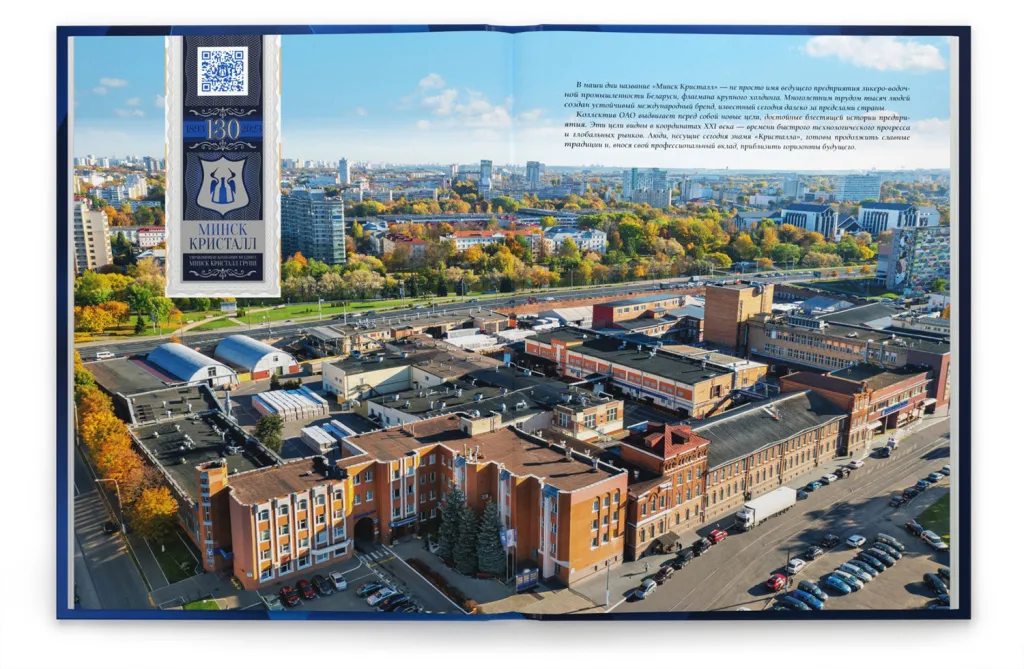
The Book "MINSK KRISTALL. Taste of Centuries"
To mark the company's 130th anniversary, an anniversary book dedicated to the history and present day of MINSK KRISTALL was published. The book reveals the history of the enterprise, connecting it with an outline of the emergence and development of distilling in the lands of modern Belarus.
It transports the reader into the atmosphere of different eras, uncovering new pages of the past, introducing the technologies, people, and enterprises that together create the legend of the MINSK KRISTALL GROUP holding.
Thanks to meticulous work in archives and collections, the book reveals little-known facts and vivid stories reflected on every page.
Read the anniversary book — click on our book below!
MINSK KRISTALL Today
MINSK KRISTALL is a brand behind which lies a synthesis of experience, modern technology, and inspiration. Built on a powerful production and technical potential, it confidently sets quality standards in the industry.
The creation of modern brands is the result of teamwork among managers, marketers, technologists, laboratory specialists, and engineers. Each stage — from idea to realization — requires flawless precision, experience, and attention to detail, because quality is born from these elements.
The pursuit of excellence has become part of the MINSK KRISTALL philosophy. Like a true crystal, the company is formed from many facets — experience, technology, taste, and attention to detail. All of this is reflected in the products, where traditions and craftsmanship find their purest expression.
The history of MINSK KRISTALL continues — in ideas, people, and taste discoveries. Times change, but one thing remains constant — the drive to create products worthy of trust and respect, where the value of each individual and the experience of generations create a unique result.